What Is Forestry Mulching & How Does It Work?
Forestry mulching uses specialised machinery to cut and process suitable vegetation on site. Learn how the machine works, what happens to the mulch and why this method can be an efficient option for managing overgrown land.
How the machinery works
Powerful Machinery. Efficient Vegetation Clearing.
Forestry mulching uses a powerful, high-flow skid steer fitted with a specialised attachment to cut, shred and grind dense vegetation directly on site.
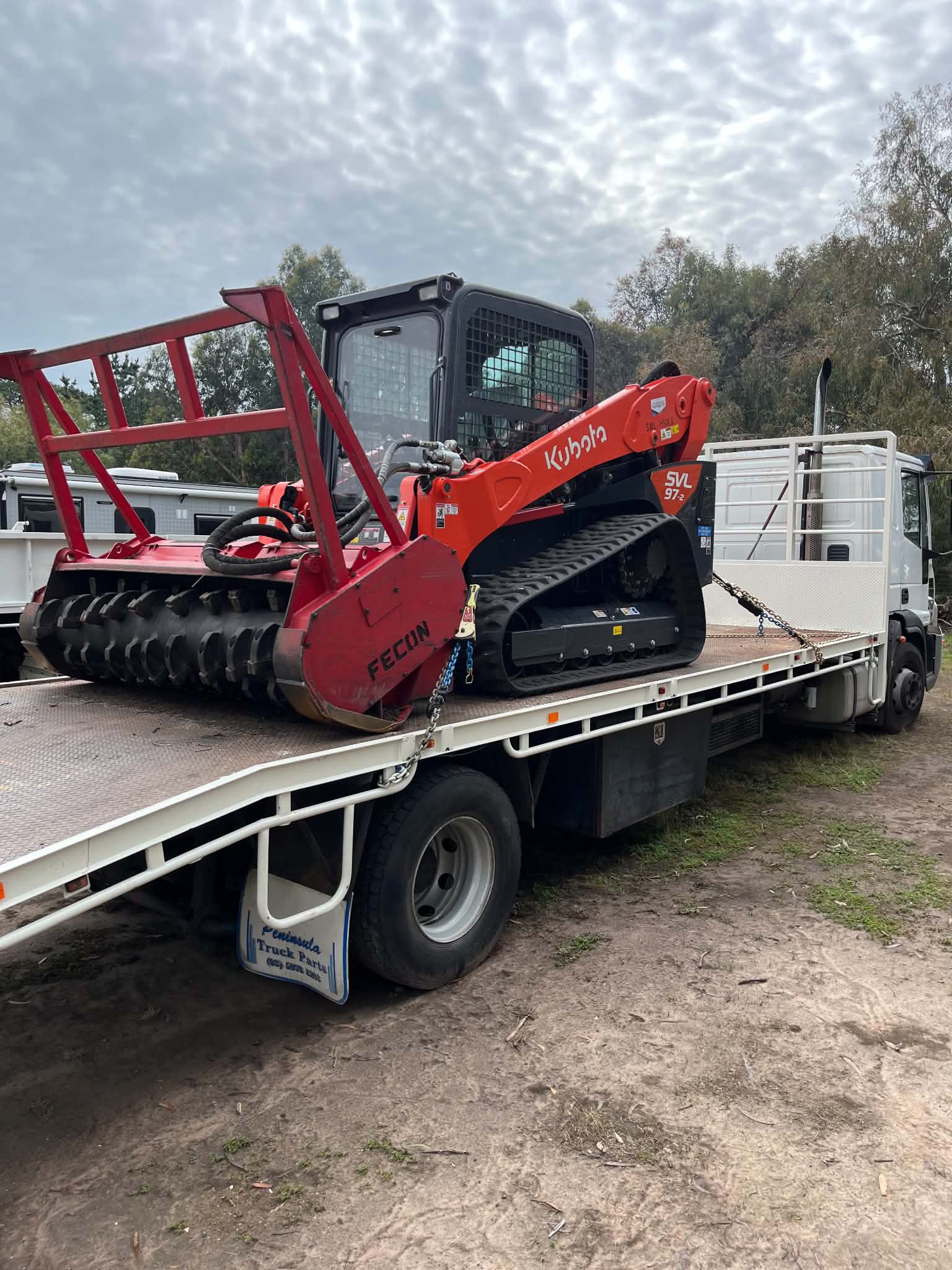
Our Kubota SVL97-2 powers a heavy-duty Fecon forestry mulcher. A rapidly rotating drum fitted with cutting teeth processes suitable thick scrub, woody weeds, saplings and small trees.
The attachment needs significant hydraulic power. Where vegetation and site conditions suit, this setup can process material much faster than cutting, collecting and removing it by hand. Work that would take considerable time manually can sometimes be mulched in a few hours, with the vegetation processed into mulch on site.
The Benefits
Forestry mulching offers significant advantages over traditional land clearing methods.
Fuel-Load Reduction & Property Preparation
Manage vegetation, reduce fuel loads and improve access as part of broader property preparation. Requirements vary by property.
Mulch Processed On Site
Suitable vegetation is processed into mulch on site, reducing the need to collect and haul every stem. Machine turns and site conditions can still disturb the ground, so the impact depends on the terrain and conditions.
Efficient, Flexible Clearing
One setup handles cutting and mulching. Lighter growth may be completed in one pass; dense or thicker vegetation can need repeated passes or back-and-forth work.
Immediate Land Improvement
Your land is ready for use right away — no waiting for cleanup. Perfect for building, farming, or recreation.
Mulch Left On Site
Processed vegetation remains on site. Its effects on moisture, soil and regrowth depend on the material, depth and conditions; follow-up planting or weed control may be needed.
Cost Effective
By eliminating the need for multiple contractors and equipment, forestry mulching reduces overall project costs while delivering superior results.
Before, During & After
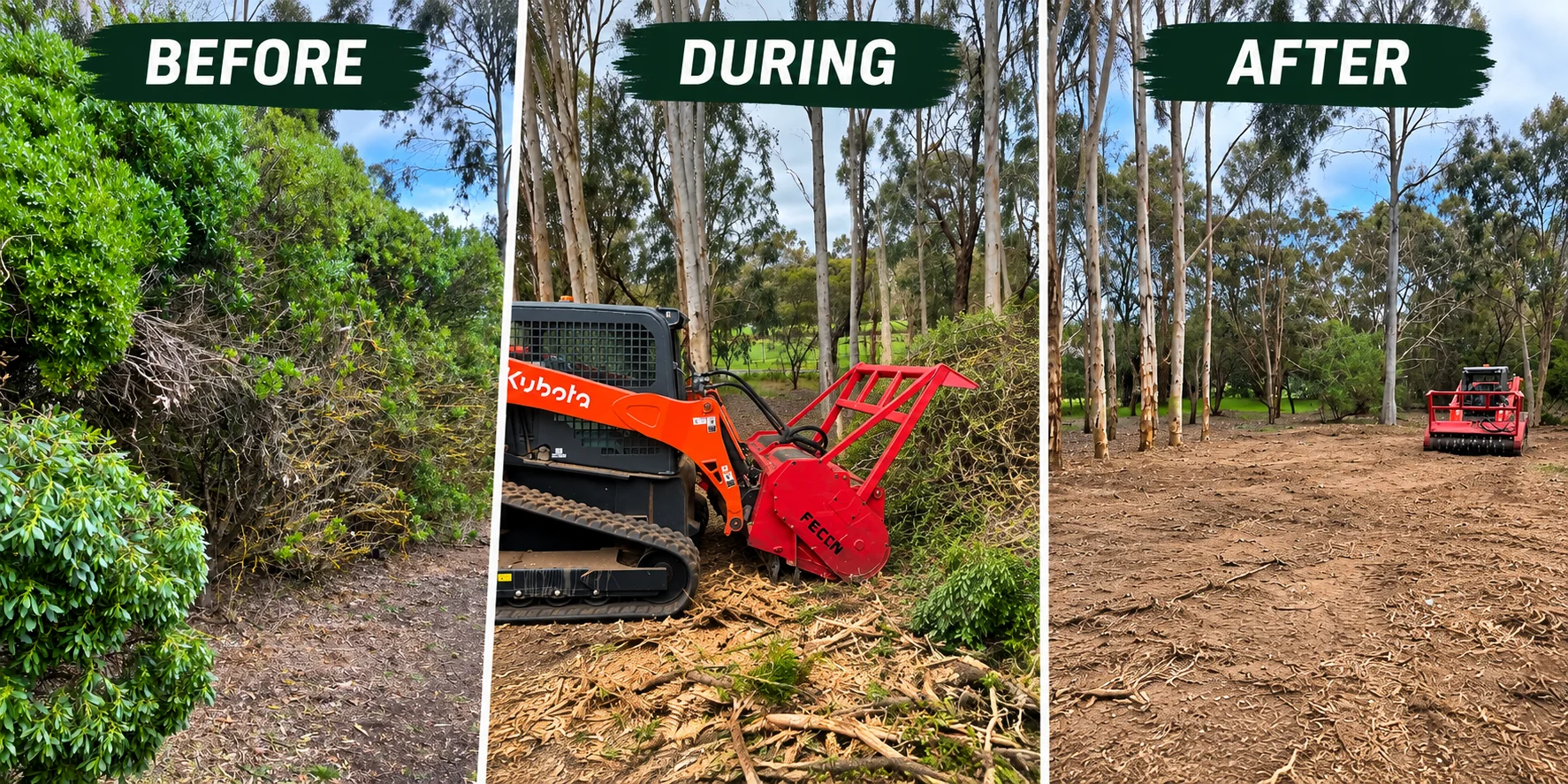
A site shown before work, while the Fecon mulcher is operating, and after the vegetation has been mulched.
How It Compares
See how forestry mulching stacks up against other land clearing methods.
| Method | Clearing | Disposal | Cost | Environment | Time |
|---|---|---|---|---|---|
| Forestry Mulching | One or more passes | Returns to soil | Lower | Excellent | Fast |
| Bulldozing | Multiple passes | Burn/haul | Higher | Poor | Slow |
| Burning | Manual prep | Smoke/ash | Medium | Poor | Very slow |
| Manual Clearing | Labour intensive | Haul away | Very high | Good | Very slow |
The Process
I usually visit the property to see what's practical, discuss what you want to achieve and estimate the cost. Jobs range from a small area to a much larger block; we can talk through what fits your budget and, if it suits, break the work into stages.
- 1On-site visit to assess the property and practical scope
- 2Discuss priorities, estimated costs and what fits your budget
- 3Agree on one area or a staged plan
- 4Schedule the agreed work
- 5Mulching the agreed area, with repeat passes where thicker growth needs them
- 6Review the result and discuss follow-up if needed

Ready to Experience the Difference?
Get a free, no-obligation quote and see why so many landowners choose forestry mulching.