Fire season has a way of sneaking up. One minute it's the middle of winter and the paddocks are soaked, the next it's a warm week in spring and you're looking at a block that's grown a metre of regrowth since you last thought about it.
To be clear — this isn't a post telling you to get everything done right now while it's still wet. It's the opposite. Now is simply the time to start thinking about what your property might need before summer, so you're not scrambling when the fire danger period arrives. Mulching and vegetation work is one of the main ways landowners knock back fuel loads and open things up, and a bit of planning now makes the whole thing easier.
So this feels like a good moment to share what we've been up to behind the scenes, and to point you towards a tool that makes planning your property a whole lot simpler.
A newer machine on the job
We've upgraded our skid steer. It's still a Kubota — we know the machines and they've served us well — but this is a newer version, and there are a few differences you'll actually notice on your property.
The biggest one, from our early use, is a more tightly sealed cab. That means less dust and debris kicked around during the job, a cleaner finish when we pack up, and a driver who isn't wearing half your block on his face by knock-off. It also runs a touch smoother and with slightly more power, which helps us work efficiently through denser scrub and get a more consistent result across the site.
None of that changes what we do — but it makes the work tidier, quicker in the right conditions, and a bit more comfortable for us, which is never a bad thing over a long day.
Serious about fire safety — on our own gear too
Working in fire-prone bush all day, we take our own fire safety seriously. Our skid steer is now fitted with an automatic fire suppression system through the team at Encaps — so if something ever goes wrong on the machine, it's dealt with fast, before it becomes a bigger problem out in dry country.
We've also picked up their FireStryker extinguishers, which are designed to be far more effective on lithium-battery fires than standard equipment. That's worth flagging for landowners, not just us: lithium battery fires are becoming more and more common — power tools, e-bikes, mowers, solar battery gear, EVs — and standard extinguishers often won't put them out. If you've got lithium batteries around the shed or the house, it's genuinely worth taking a look at what Encaps offer. We're not paid to say that — it's just good kit and it fits how we think about fire risk.
Map Your Property — plan before you clear
We built this because so many landowners know roughly what they want done but find it hard to describe over the phone. Now you don't have to.
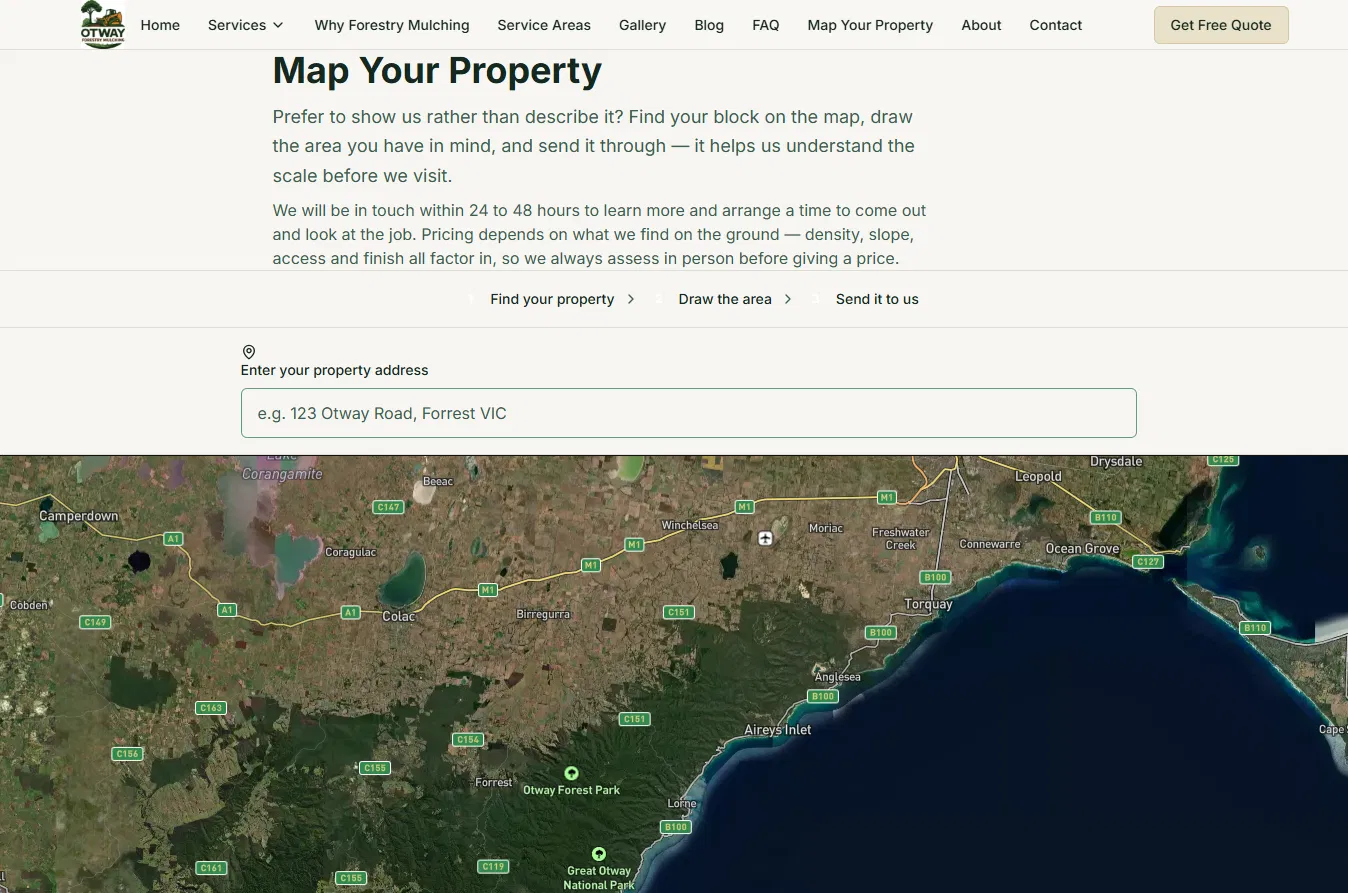
On our Map Your Property page you can find your block on a satellite map, draw the areas you want mulched or slashed right where they are on the ground, see how big that area is so you and we both have a real sense of scale, and check which planning overlays affect your property — which matters more than most people realise.
That last point is a big one. A lot of the properties we work on sit within a Bushfire Management Overlay (BMO), and overlays like this set out what you can and can't clear, and how close to your home certain works can be done. Some vegetation work for bushfire protection is exempt from a planning permit when it's done to the guidelines — but clearing native vegetation under other overlays can still need council approval. It's not always obvious which situation you're in.
The tool helps you see what's on your block before you spend money, and flags when it looks like you may need to check in with your council first. If you're ever unsure, that's exactly the kind of thing we help you work through — we do a lot of work on BMO properties and we're used to navigating what's allowed.
Slashing vs mulching — and how we quote each
One handy thing this tool does is help us quote the right way for the right job.
For slashing, if you can map the area and send us a photo or two, we can often give you a quote online or over the phone — no site visit needed. Knowing the exact size and seeing the terrain does most of the work.
For mulching, we still like to come out and quote in person. It really depends on the terrain, what you're mulching, and how we can access the site — all of which are much easier to judge with boots on the ground. Mapping your property first still makes that visit faster and more productive, because we already know what we're walking into.
Start planning now
The best time to sort your fire-season vegetation work is before the season starts. Booking early means priority in the calendar, work done in better ground conditions, and no last-minute scramble when the fire danger period arrives.
So if you've got a block that needs opening up, a fuel load to knock back before summer, or an access track that's disappeared under regrowth, now's the time to map it out. Jump onto the Map Your Property page, mark up what you're thinking, and send it through. We'll be in touch within 24–48 hours to talk it over — and if it's a mulching job, arrange a time to come and take a look.
Let's get your property sorted before summer.